

What if dinner became one of the reception’s most memorable moments without bringing the celebration to a halt? Interactive food stations for weddings can add movement, visual appeal, and meaningful choice, but the setup should feel like part of the evening, not a queue guests have to navigate.
Choosing the right concepts means thinking beyond the menu. Consider your reception style, guest list, venue layout, and schedule, then decide how stations will work alongside conversation, dancing, and seated courses. This guide covers ways to compare service formats, plan guest movement, and discuss staffing, replenishment, and dietary needs with your caterer.
Key Takeaways
- Choose interactive food stations for weddings that suit your reception style and give guests a clear, enjoyable reason to gather.
- Map the venue layout and guest movement before choosing station locations, so dining feels smooth rather than crowded.
- Discuss menu choices, staffing, replenishment, accessibility, and timing with your caterer as part of one coordinated plan.
- Use custom menu design and thoughtful presentation to connect each station to the wedding’s overall dining experience.
Why Interactive Food Stations for Weddings Create Memorable Reception Moments
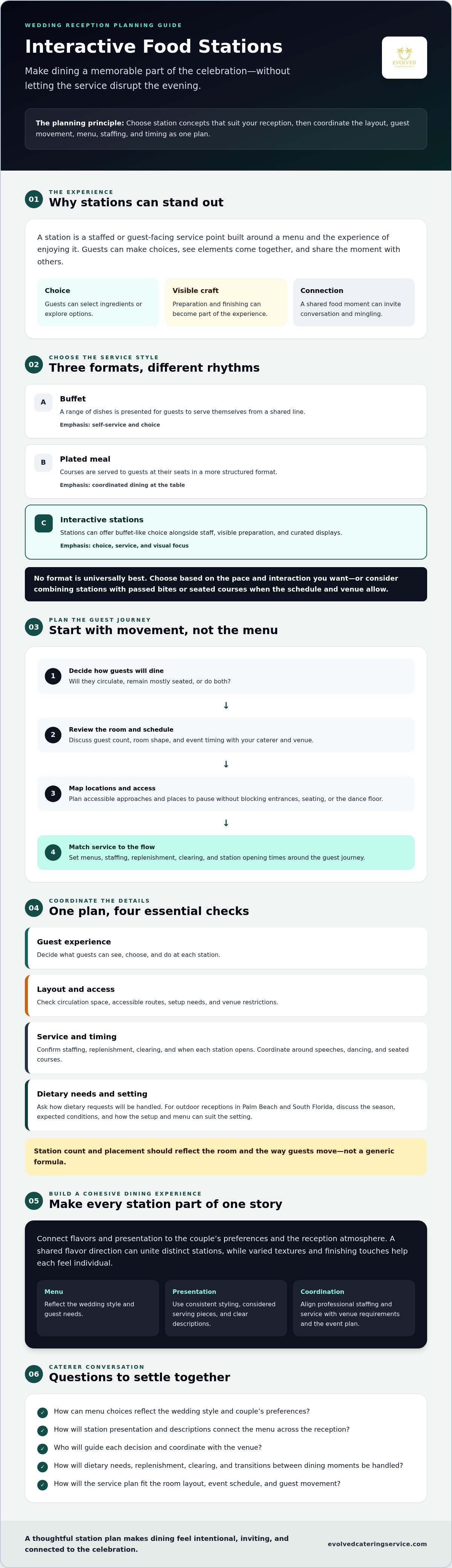
A reception meal can do more than bring guests to the table. Interactive food stations for weddings turn dining into a series of inviting moments, where guests can make choices, watch elements come together, and share the experience with others. A station is a staffed or guest-facing service point organized around a particular menu and the experience of enjoying it. Visible preparation, thoughtful presentation, and room to mingle can make the meal feel lively while giving guests options beyond a single set path.
Stations build on the self-service tradition of the history of buffet-style dining, while adding opportunities for guided service and visible culinary craft. Guests might select ingredients or speak with a chef as a dish is finished. Those small exchanges can spark conversation and give the reception a distinctive rhythm.
How stations differ from buffets and plated wedding meals
A buffet usually presents a range of dishes for guests to serve themselves from a shared line. A plated meal is more structured, with courses served to guests at their seats. Stations sit between these formats: they can offer choice like a buffet, while staff, live preparation, and curated displays add service and visual focus. No format is universally best. Each creates a different pace and level of interaction.
Stations can also complement passed bites during cocktail hour or seated courses later, if the schedule and venue allow. Versatile event destinations like Silverwood Resort demonstrate how flexible grounds give caterers room to set up creative culinary stations without impeding the celebration's flow. Compare the formats by asking what matters most: a coordinated dinner at the table, a social flow that encourages guests to mingle, or a balance of both. Then consider where guests will move and gather, and how the menu and presentation can reflect the wedding’s style. A well-chosen format makes dining feel intentional, not simply convenient.
How to Plan Wedding Food Stations Without Queues or a Chaotic Reception
Planning interactive food stations for weddings begins with the guest journey, not the menu. Decide whether guests will circulate, remain mostly seated, or do both. Then review the guest count, room shape, and event schedule with your caterer and venue. Mark station locations, accessible approaches, and places where guests can pause without blocking entrances, seating, or the dance floor. A proper guest-flow planning reference can help guide your venue-layout discussion.
What details should couples settle before choosing stations?
Once the room’s flow is clear, match the menu and service plan to it. Ask how staff will respond to dietary requests, replenish dishes, and clear used plates. Discuss how service will fit around speeches, dancing, or seated courses, and whether station opening times can help spread guest traffic. The number and placement of interactive food stations for weddings should reflect the room and how guests will move, not a generic formula.
- Guest experience: Decide what guests can see, choose, and do at each station.
- Layout and access: Check circulation space, accessible routes, setup needs, and venue restrictions.
- Service and timing: Confirm staffing, replenishment, clearing, and when each station opens.
For outdoor receptions in Palm Beach and South Florida, discuss the season and expected conditions with your caterer, including how the setup and menu can suit the setting. Thoughtful coordination helps keep the experience inviting rather than disruptive. Couples exploring Evolved Catering Services for wedding catering and event coordination can use these questions to start a practical planning conversation.
How a Wedding Caterer Turns Food Stations into a Cohesive Dining Experience
The best interactive food stations for weddings feel like chapters in one culinary story, not unrelated menu points. A caterer can shape that story through custom menu design, connecting flavors and presentation to the couple’s preferences and the reception’s atmosphere. For instance, a globally inspired menu might carry a shared flavor direction across distinct stations, while varying textures and finishing touches to make each one feel different. These are concepts to explore with a caterer.
Presentation carries that sense of cohesion into the room. Consistent styling, considered serving pieces, and clear descriptions can help guests understand how each station fits the overall experience. Professional staffing and event coordination help bring the concept to life by aligning service with the venue’s requirements and the event plan. That coordination can make the culinary design feel intentional from one part of the reception to the next.
Questions to ask a caterer about interactive wedding stations
Use your planning conversation to understand who will guide each decision and how the concept will translate on the day. Ask how menu choices can reflect your wedding style, how station presentation will be developed, and how the catering team will coordinate with the venue. Clarify how dietary needs and transitions between different dining moments will be addressed. These details help you assess whether the proposed interactive food stations for weddings will feel unified as well as engaging.
- Who will design the menu and connect the station concepts to the wedding’s culinary vision?
- How will the presentation and descriptions help guests navigate the menu?
- How will the catering team coordinate service with the venue and reception plan?
For couples considering luxury wedding catering in Palm Beach, these questions can help turn an initial idea into a thoughtful plan. Learn more about Evolved Catering Services.
Shape a Reception Guests Will Remember
The most successful dining experience reflects the couple’s priorities while making guests feel welcome and at ease. Interactive food stations for weddings can bring personality and energy to the reception when the menu, presentation, and service are planned as one experience. A clear layout and coordinated timing help dining complement the celebration rather than compete with it.
Led by Chef Jennifer Parker, Evolved Catering Services offers wedding catering with custom menu design, professional staffing, event coordination, and interactive food stations. The company serves celebrations in Palm Beach, Jupiter, West Palm Beach, Boca, Miami, and the Hamptons, with attention to the details that shape the guest experience.
Frequently Asked Questions
What are interactive food stations at a wedding?
Interactive food stations at a wedding are dedicated service areas where guests select or personalize dishes, sometimes with a chef or attendant preparing or finishing them. Unlike a static display, a station can invite conversation and add a visual moment to the meal. The experience depends on the menu, staffing, venue layout, and how service fits the reception schedule.
Are food stations a good idea for a wedding reception?
They can suit couples who want guest choice and a more social, exploratory dining experience, but they are not right for every venue or timeline. Consider the guest count, accessible routes, available space, and how stations fit the reception schedule. For weddings in Palm Beach, Jupiter, West Palm Beach, Boca, Miami, or the Hamptons, review the plan with your caterer and venue.
How do you keep wedding food stations from getting crowded?
Plan station locations with your caterer and venue so guests can approach and move away without blocking seating or key walkways. Discuss staffing, replenishment, and when guests will be invited to dine. The right setup depends on the room, guest count, and service style, so avoid relying on a generic station-to-guest ratio. Clear instructions can also help guests find their way.
Can wedding food stations accommodate dietary restrictions?
They may accommodate dietary needs when the menu and service plan account for them in advance. Share restrictions with the caterer early, then ask how dishes and ingredients will be identified and how relevant cross-contact concerns will be handled. Don’t assume every station suits every diet. Confirm the specific arrangements with the catering team so guests know which options are appropriate.
Planning a wedding reception in Palm Beach, Jupiter, West Palm Beach, Boca, Miami, or the Hamptons? Explore wedding catering and interactive food stations with Evolved Catering Services.


